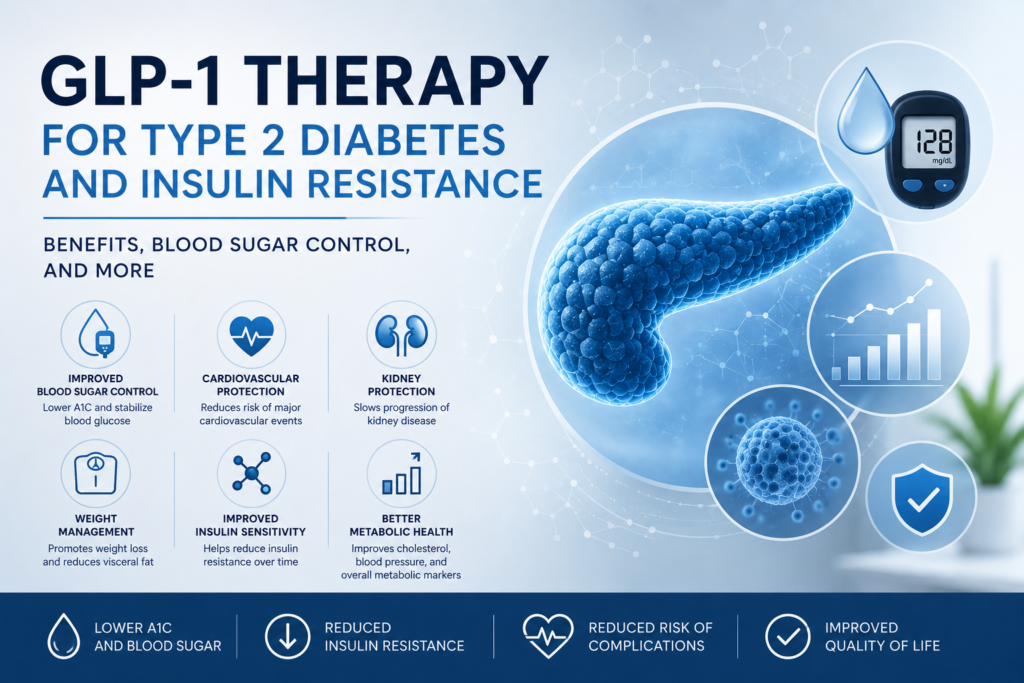
Type 2 diabetes affects more than blood sugar. It is a complex metabolic disease characterized by insulin resistance, progressive beta-cell dysfunction, chronic inflammation, and an increased risk of cardiovascular disease, kidney disease, neuropathy, retinopathy, and other long-term complications. For many years, diabetes treatment focused primarily on lowering blood glucose. Today, the goal is broader: reducing cardiovascular and kidney complications, improving metabolic health, preserving quality of life, and addressing excess body weight when appropriate. GLP-1 therapy for type 2 diabetes helps improve blood sugar control, reduce insulin resistance, promote weight loss, and lower cardiovascular risk.
GLP-1 receptor agonists such as semaglutide and dual GIP/GLP-1 receptor agonists such as tirzepatide have become important treatment options because they address several of these goals simultaneously. In addition to improving blood sugar, they can promote weight loss, reduce cardiovascular events in high-risk patients, and provide kidney protection in appropriate populations
Interested in medical weight management
Complete a secure online evaluation at your convenience to get a head start on treatment or schedule an in-person consultation at our Eldersburg office.
Type 2 diabetes develops when the body becomes resistant to insulin and the pancreas gradually loses its ability to produce enough insulin to overcome that resistance.
Normally, insulin allows glucose to move from the bloodstream into muscle, liver, and fat cells where it is used for energy or stored. With insulin resistance, these tissues respond less effectively, causing the pancreas to produce increasing amounts of insulin to maintain normal blood glucose levels.
Over time, pancreatic beta cells can no longer keep up with the body’s demands. Blood glucose begins to rise, leading to prediabetes and eventually type 2 diabetes if untreated.
Insulin resistance often develops years before type 2 diabetes is diagnosed.
In this condition:
Many patients have elevated insulin levels long before fasting glucose or hemoglobin A1c become abnormal.
Common risk factors include:
Early identification provides an opportunity to intervene before diabetes develops.
GLP-1 receptor agonists work through several coordinated mechanisms.
These medications can:
Because insulin secretion is glucose dependent, GLP-1 medications generally have a lower risk of hypoglycemia when used alone compared with medications that stimulate insulin regardless of glucose levels.
Weight loss remains one of the most effective ways to improve insulin resistance.
By reducing appetite and supporting sustained weight loss, GLP-1 therapy can improve insulin sensitivity over time. Tirzepatide has demonstrated particularly strong improvements in insulin sensitivity in clinical studies, although semaglutide also produces meaningful metabolic benefits.
Importantly, improvements in blood glucose often begin before substantial weight loss occurs, suggesting that GLP-1 medications exert direct metabolic effects in addition to their impact on body weight.
Modern diabetes treatment focuses on improving long-term health—not simply lowering glucose.
Clinical trials have demonstrated that certain GLP-1 receptor agonists can:
These benefits have changed how clinicians approach diabetes management, particularly for patients at high cardiovascular or renal risk.
GLP-1 therapy may be appropriate for adults with:
Treatment decisions should always be individualized after reviewing medical history, laboratory data, current medications, and overall health goals.
Medication is only one component of comprehensive diabetes care.
Patients achieve the best long-term outcomes when GLP-1 therapy is combined with:
These lifestyle strategies support blood sugar control while helping preserve lean muscle mass during weight loss.
At Vybrant Health & Wellness, diabetes management extends beyond lowering your A1c.
We evaluate:
Our goal is to create an individualized treatment plan that improves metabolic health while reducing long-term complications.
At Vybrant Health and Wellness in Eldersburg, Maryland, medical weight-management care begins with an individualized evaluation rather than a one-size-fits-all prescription. Your health history, laboratory results, body composition, previous weight-loss efforts, current medications, nutritional intake, and long-term goals should all be considered before selecting a treatment plan.
Eligible patients in Maryland and Delaware may receive in-person or telehealth care based on their location and clinical needs
Some patients notice changes in appetite during the first few doses, while others require gradual dose escalation before experiencing a meaningful effect. Weight and metabolic changes generally develop over several weeks to months.
Some patients achieve remission of type 2 diabetes through substantial weight loss and improved metabolic health. However, remission is not guaranteed, and ongoing medical follow-up remains essential.
The risk is generally lower when they are used alone because their insulin-stimulating effects are glucose-dependent. The risk increases when they are combined with insulin or medications such as sulfonylureas.
Yes. GLP-1 therapy can improve insulin sensitivity directly and indirectly through weight loss, better glucose control, and reduced visceral fat.
No. They work differently than insulin and are not appropriate for everyone. Some patients may use both medications together under medical supervision.
The best medication depends on your medical history, weight, cardiovascular risk, kidney function, insurance coverage, treatment goals, and individual response.
Approved weight-management products are indicated in combination with reduced-calorie nutrition and increased physical activity. Medication can improve the biological signals involved in hunger, but long-term health outcomes still depend on nutrition, movement, muscle preservation, sleep, and medical follow-up
No. Dose selection should be based on treatment response, tolerability, clinical goals, and the specific medication’s prescribing instructions. Higher is not automatically better.
Prescription weight-loss medications, including GLP-1 receptor agonists and dual GIP/GLP-1 receptor agonists, are not appropriate for everyone. Treatment eligibility is determined only after a comprehensive medical evaluation and review of your medical history, current medications, laboratory data (when indicated), and individual health goals.
Results vary from person to person. No amount of weight loss or specific clinical outcome can be guaranteed. Medication is intended to be used as part of a comprehensive treatment plan that includes nutrition, physical activity, and lifestyle modification when appropriate.
Telehealth services are available only to patients who are physically located in states where Vybrant Health and Wellness is licensed to practice at the time care is provided. Completing an online medical evaluation or questionnaire does not guarantee treatment, a prescription, or acceptance as a patient. All treatment recommendations are made solely at the discretion of the evaluating healthcare provider based on medical appropriateness and applicable laws and regulations.
Drucker, D. J. (2024). Efficacy and safety of GLP-1 medicines for type 2 diabetes and obesity. Diabetes Care, 47(11), 1873–1888. https://doi.org/10.2337/dci24-0003
Neuen, B. L., Fletcher, R. A., Heath, L., Perkovic, A., Vaduganathan, M., Badve, S. V., Tuttle, K. R., Pratley, R., Gerstein, H. C., Perkovic, V., & Heerspink, H. J. L. (2024). Cardiovascular, Kidney, and Safety Outcomes With GLP-1 Receptor Agonists Alone and in Combination With SGLT2 Inhibitors in Type 2 Diabetes: A Systematic Review and Meta-Analysis. Circulation, 150(22), 1781–1790. https://doi.org/10.1161/CIRCULATIONAHA.124.071689
The Lancet Diabetes & Endocrinology Meta-analysis Group. (2024). Effects of GLP-1 receptor agonists on kidney and cardiovascular disease outcomes: A meta-analysis of randomized controlled trials. The Lancet Diabetes & Endocrinology. https://pubmed.ncbi.nlm.nih.gov/39608381/